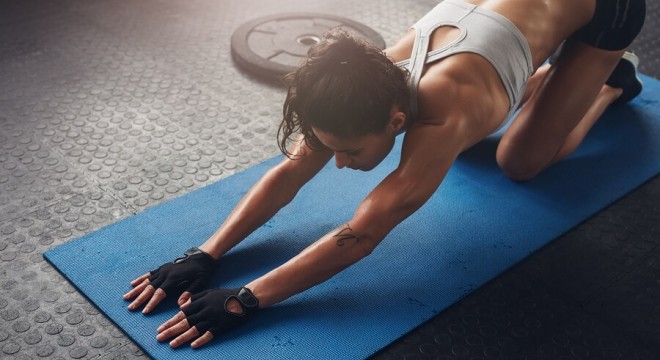
To achieve a well-rounded approach to your fitness, it’s important to include flexibility in your training.
Benefits of Flexibility
There are a number of benefits to improving flexibility, such as:- Reducing the risk of injury during sport, exercise and activities of daily living due to increased functional range of movement (ROM).
- Assisting with posture by helping realign skeletal structures and addressing muscular imbalances.
- Improving the ROM and physical function in joint synovial fluid, which is an important factor in countering the loss in range of motion that occurs with ageing and degenerative joint disease.
- Contributing to a reduction in emotional and psychological stressors by releasing tension both mentally and within the exercised muscle.
Flexibility Tests
There are many different flexibility tests with three of the most common being: Flexibility testing should be completed as part of the initial consultation to give fitness professionals a better understanding of their client’s abilities, and what exercises need to be incorporated or avoided to assist in making fitness gains.Improving Flexibility
Although there are a variety of stretching techniques, the three primary types that you should use to improve flexibility are dynamic, static and proprioceptive neuromuscular facilitation (PNF).Dynamic
To perform dynamic stretching, take the joint through its full ROM at the beginning of exercise or activity. This helps prepare the muscles and joints, however it is less effective for improving flexibility.Static stretching
Static stretching involves passively or actively taking a specific joint, or set of joints, through a ROM to a mild point of tension.PNF
Lastly, PNF stretching has been shown to yield the greatest change in range of motion, which presents short-term benefits. This form of stretching will have the most profound effect on your client’s flexibility. By incorporating flexibility training into programming, you will be a step closer to excelling in your fitness goals, avoiding injury and experiencing a better quality of life. References- Ehrman, J. (2010). ACSM’s resource manual for Guidelines for exercise testing and prescription. Philadelphia: Wolters Kluwer Health/Lippincott Williams & Wilkins.
- Frederick, A. & Frederick, C. (2006). Stretch to win. Champaign, IL: Human Kinetics.
- Reynolds, G. (2008). Stretching: The Truth. New York Times, 3rd, October.
- Sharman, MJ; Cresswell, AG; Riek, S (2006). “Proprioceptive neuromuscular facilitation stretching: Mechanisms and clinical implications”. Sports medicine (Auckland, N.Z.) 36 (11): 92939.