Welcome to this series of articles where we look back at the top 10 fitness trends of 2025 as surveyed by ACSM and ask ourselves: what it is, why it’s booming, how fitness professionals can harness it, and what the next few years look like?
ACSM’s 2025 industry survey lists functional fitness training as the ninth most influential trend shaping the industry this year.
Step into any gym in 2025 and you’ll notice something: people are less focused on maxing out a bench press or logging endless miles on the treadmill. Instead, they’re hoisting sandbags, practicing rotational lunges with cables, crawling, lifting odd objects, and using kettlebells, suspension trainers, and medicine balls in ways that mimic the unpredictable movements of daily life. This is functional fitness training.
It’s not new, but its evolution has made it more popular than ever. Functional fitness is no longer just a buzzword; it’s become a foundation for health, longevity, and athleticism across age groups and ability levels.
What Is Functional Fitness Training?
At its simplest, functional fitness training is exercise that trains the body for real-life activities, not just gym-based movements. It prioritizes multi-joint, multi-planar, compound exercises that mimic how we move in everyday life or in sport.
Think of:
- Squatting to pick up groceries.
- Rotational lifts that simulate carrying a child.
- Pushing, pulling, hinging, twisting, and carrying under load.
- Moving dynamically across multiple planes of motion.
While traditional strength training isolates muscles (like bicep curls or leg extensions), functional training emphasizes movement patterns (like squats, pushes, pulls, carries, hinges, rotations, and locomotion). It often uses free weights, bodyweight, suspension systems, resistance bands, medicine balls, sandbags, sleds, or kettlebells rather than fixed machines.
The philosophy: train movements, not muscles — so that fitness translates beyond the gym to life, work, and play.
Why It’s Popular In 2025
Several drivers explain why functional training has climbed into the top 10 fitness trends this year:
- Longevity and active aging. Populations worldwide are aging, and older adults want to stay mobile, independent, and pain-free. Functional training directly supports balance, coordination, stability, and fall prevention.
- Holistic definition of fitness. Today’s consumer values being capable in daily life, not just aesthetic goals. People want to move with ease, carry their luggage, climb stairs, and play with kids or grandkids. Functional fitness delivers practical capacity.
- Athletic crossover. Professional and recreational athletes alike have embraced functional modalities to improve performance, reduce injury risk, and build “real-world strength.”
- Variety and engagement. Functional training is dynamic, playful, and adaptable. It can be done with minimal equipment, indoors or outdoors, solo or in groups — making it a versatile and engaging option for clients bored of traditional routines.
- Rehabilitation and injury prevention. Physical therapists and corrective exercise specialists use functional training to retrain natural movement patterns, making it a bridge between rehab and high performance.
- Technology integration. Wearables, smart platforms, and AI-driven coaching now analyze movement patterns and recommend corrective functional exercises — making functional training more data-driven and personalized.
Who Benefits — And Why Fitness Pros Should Pay Attention
Functional training truly spans the spectrum:
- Everyday clients: Builds strength and coordination for daily activities, helping prevent injuries in real life.
- Athletes: Enhances sport-specific movement efficiency, agility, and explosive power.
- Older adults: Improves balance, stability, mobility, and independence.
- Post-rehab clients: Re-establishes correct patterns and prevents re-injury.
- Corporate wellness participants: Offers quick, efficient workouts that reduce workplace-related musculoskeletal issues.
For fitness professionals, functional fitness is a chance to differentiate. By teaching smarter movement and connecting exercises to daily function, trainers become problem-solvers, not just workout deliverers. This leads to higher retention and more word-of-mouth referrals.
How Fitness Professionals Can Leverage The Trend
If you’re a coach, trainer, or operator, here’s how to integrate functional training into your offerings:
- Assess movement first. Before prescribing functional training, evaluate mobility, stability, and movement patterns. Use tools like movement screens to identify weak links.
- Build from basics. Start with foundational movements (squats, hinges, pushes, pulls, carries) and scale difficulty as clients progress. Always emphasize form and function over load.
- Progress and regress smartly. Functional training is endlessly scalable. A beginner might perform a bodyweight squat to a chair, while an advanced client does a weighted, single-leg squat on an unstable surface.
- Integrate across programming. Blend functional elements into traditional workouts — for example, pairing deadlifts with carries, or push-ups with rotational core work.
- Educate clients. Highlight how each exercise translates to real life (“this movement helps when you lift your suitcase overhead”). Clients love connecting gym work to their lived experiences.
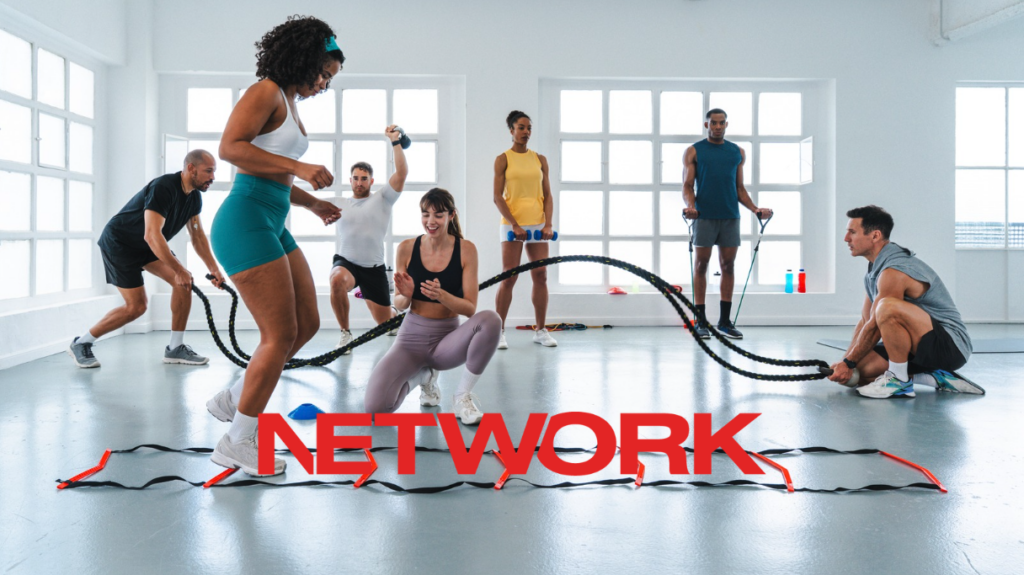
- Offer small-group sessions. Functional circuits and obstacle-style classes are perfect for groups — they build camaraderie, allow scalability, and create a dynamic, fun environment.
- Market it as life training. Move away from abstract language (“stability training”) and toward client-centered messaging (“train to lift, carry, climb, and move without pain”).
Business Models That Work In 2025
- Functional small-group classes: Bootcamps, circuit stations, or “everyday athlete” sessions with a cap of 6–10 participants.
- Hybrid training bundles: Personal training packages combining strength and functional conditioning, with progression plans tracked digitally.
- Special populations programs: Active aging groups, fall-prevention classes, or post-rehab functional sessions designed for niche markets.
- Corporate functional workshops: 30–60 minute sessions at workplaces to reduce musculoskeletal strain and improve productivity.
Functional Training Tools In 2025
While bodyweight remains the foundation, today’s functional gyms feature:
- Kettlebells: For swings, cleans, presses, and carries.
- Sandbags: For awkward, real-world loads.
- Suspension trainers: For scalable bodyweight strength.
- Battle ropes and sleds: For full-body, power-driven moves.
- Cable systems and resistance bands: For rotational and anti-rotational training.
- Balance and stability tools: Bosu balls, wobble boards, and foam pads to challenge proprioception.
Importantly, functional fitness isn’t about the tools themselves — it’s about how they’re applied to replicate natural, transferable movement.
What The Future Holds
Short term (1–3 years):
- Growing emphasis on functional training for aging populations and workplace wellness programs.
- Wearable tech that provides real-time movement feedback, integrating functional assessments into training apps.
Medium term (3–5 years):
- Expanded integration with physical therapy and rehabilitation fields. Expect more gyms partnering with clinics to offer functional-based recovery and prevention programs.
- Evolution of “movement gyms” — facilities that specialize in mobility, play, and functional circuits rather than traditional bodybuilding setups.
- Standardization of certifications and movement screening protocols to ensure safe, evidence-based programming.
Long term (5+ years):
- Functional fitness becomes the default paradigm for general training, while traditional machine-based isolation training takes a back seat.
- Widespread use of AI motion analysis to prescribe highly individualized functional programs.
- Mainstream recognition of functional training as not just exercise, but essential “movement medicine” for health and longevity.
Cautions And Considerations
- Risk of complexity. Functional exercises can be technical. Poor instruction may lead to injury. Trainers must master regressions and progressions.
- Not one-size-fits-all. Some clients may still benefit from traditional isolation work (especially in hypertrophy or rehabilitation contexts). Functional training should complement, not completely replace, other modalities.
- Equipment overload. The market is flooded with “functional” gadgets. Stick to proven tools and focus on programming, not novelty.
Final Word: Why Fitness Pros Should Care Now
Functional fitness training sits at the intersection of health, performance, and daily living. It empowers older adults to age actively, athletes to perform better, and everyday clients to move confidently and pain-free. For fitness professionals, it offers versatility, differentiation, and a direct way to prove value to clients.
This trend isn’t about flashy equipment or gimmicks — it’s about returning to the roots of what exercise is meant to do: make us stronger, more capable humans outside the gym walls. By integrating functional training into your practice now, you’ll future-proof your business, serve a wider audience, and deliver what clients truly want in 2025: fitness that works in real life.
Please Note: The information provided in this article are the opinions and professional experience of the author and not all activities are recommended for the beginner or participants with underlying health conditions. This author has no affiliation with any of the products mentioned. Before following any advice or starting any fitness, health and wellbeing journey please consult with an Allied Health Professional and / or General Practitioner.
| References |
| ACSM’s 2025 industry survey |